
 The TikTok Context Advantage 2026 Report - Explore How Context Drives Performance!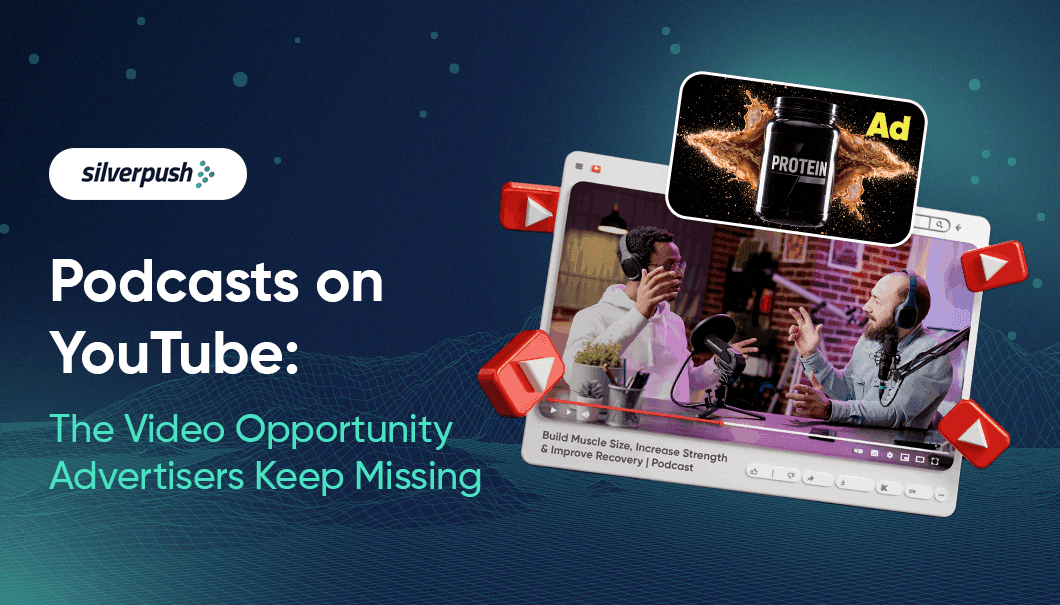
For a decade, "podcast" meant audio. Something you listened to in the car, at the gym, on a walk.
Not anymore. The single most-used platform for podcasts in the US is now YouTube, a video platform: 42% of weekly podcast consumers say they use it most, nearly three times Spotify's 14% and well ahead of Apple's 8%. The reason is simple. People no longer just want to hear their favourite hosts. They want to watch them. Around half of podcast consumers now say they prefer to actively watch podcasts with video, following the facial expressions, the body language, and the chemistry between host and guest.
A visual-first platform has become the home of an audio-first format. For advertisers, that changes both what a podcast is and how to reach one.
Not a Niche, and the Money Knows It
This is not a fringe behaviour. YouTube reports that more than 1 billion people watch podcast content on the platform every month. The ad dollars are following: US podcast ad revenue reached about $2.86 billion in 2025, up 17.6% year over year.
What makes that audience valuable is not only its size. It is the way it shows up. Podcast audiences are loyal and habitual, returning to the same voices week after week, often with the show holding the main screen rather than the background. That lean-in attention pays off: podcast campaigns generate 70% brand recall and a six-point lift in purchase intent on average. In a landscape where most ads are skipped or ignored, that kind of attention is rare.
The Podcast Label Is Not the Strategy. Context Is.
Here is where most advertisers get it wrong. They treat "podcasts" as a single audience to buy. It is not.
A single podcast channel can move from AI startups to personal finance to a celebrity interview to geopolitics across a month of episodes. Buying the channel means buying all of it, relevant or not. And because the format is unscripted and free-ranging, brand-safety tools built for other media tend to over-filter it, blocking responsible journalism and thoughtful conversation right alongside genuine risk.
The result is that brands either show up in the wrong conversations or avoid the format altogether. Both are misses. What is needed is not broader targeting or blunter exclusion, but a way to read the actual context of each podcast environment.
How Silverpush Helps to Get the Most Out Of It
This is the opportunity Silverpush's contextual intelligence is built for. Rather than buying "podcasts" as a category, its Mirrors contextual engine treats them as what they have become: long-form video environments with identifiable genres, hosts, themes, and topics.
The model is straightforward. Mirrors reads the content to find the podcast environments that match a campaign, identifies the relevant YouTube videos and channels, and applies brand-suitability controls. Hence, a brand appears only where it fits, and then measures which podcast contexts actually drove results.
So a financial services brand does not have to target "finance" and hope. It can show up specifically in investing discussions, entrepreneurship shows, and the hosts its audience already trusts, then see afterwards which of those contexts performed. The podcast becomes a precise, measurable, brand-safe environment rather than a broad bet.
The Opportunity Is Already Here
Early results point the same way. In a beta, one national advertiser using Silverpush's contextual podcast advertising on YouTube saw 4x higher conversions, a 40% higher click-through rate, and a 32% lower CPM than other audio solutions.
Podcasts have become something people choose to watch on the platform they trust most, with a level of attention and loyalty most media can only envy. The brands that win them will not be the ones who simply buy "podcasts." They will be the ones who show up in the right conversation.