




Why Gen Z is Changing the Way Brands Approach Pride Month Advertising | 19 May, 2025
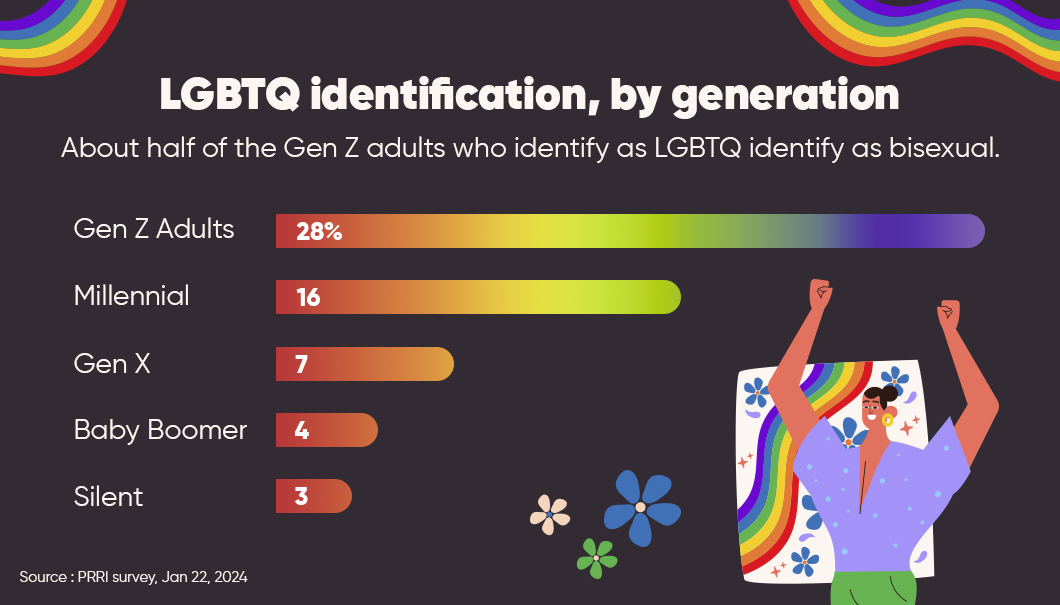
Nearly 1 in 4 Gen Z adults in the U.S. identify as LGBTQ.
That’s more than double the rate of Millennials, and it’s changing the way brands approach Pride advertising.
This isn’t just a stat. It’s a wake-up call.
Gen Z is the most diverse, values-driven generation we’ve seen. And with $3.1 trillion in global spending power, they’re not just making their own choices; they’re influencing how their friends, families, and even workplaces interact with brands.
So when Pride Month rolls around, they’re not looking for rainbow logos and feel-good slogans. They want real support. They want to see inclusion in your products, your people, and your platform, not just your June campaign.
For Gen Z, allyship isn’t a seasonal post. It’s a year-round expectation, and they’re not afraid to call out brands that don’t walk the talk. But they’ll also go all in on the ones that do.
So if you’re planning a Pride campaign in 2025, it’s time to go deeper. Here’s what Gen Z actually expects, and how your brand can show up in a way that feels real.
What Drives Gen Z to Buy During Pride (and Beyond)
But what does support actually look like to them, and how does it impact buying decisions?
Gen Z doesn’t just buy products; they buy into what your brand stands for. And during Pride, that matters more than ever. This generation is quick to spot rainbow-washing—when brands show up for the LGBTQ+ community in June, only to disappear the rest of the year. For Gen Z, real allyship means showing consistent support, not just putting up a rainbow logo once a year. They expect authenticity backed by action.
In fact, according to the McKinsey Report 2024, around 70% of Gen Z actively seek out ethical brands, and they’re not afraid to dig into a company’s track record, looking at donations, partnerships, and internal policies before making a purchase. If your values don’t line up with your marketing, they’ll notice and move on.
Representation also plays a big role. About 80% want brands to be inclusive and diverse, and more than half want to see that reflected in leadership too. For them, inclusion isn’t a marketing angle, it’s the standard. This is a generation that sees gender and identity through a wider lens. Over a third (37%) believe gender exists on a spectrum, and 23% prefer being asked for their pronouns rather than having assumptions made.
They also live and shop on social media, with more than 50% having bought something they saw on a platform. So if you’re working with LGBTQ+ creators in authentic ways, you’re already on the right track.
Ultimately, Gen Z rewards brands that are consistent, inclusive, and community-focused—not just during Pride Month, but every day of the year.
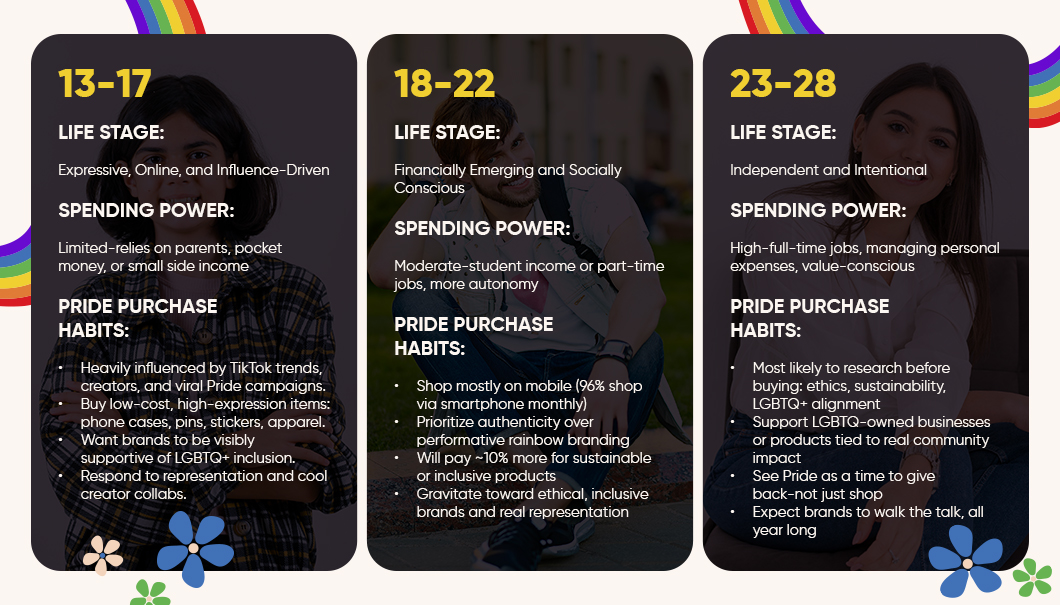
Gen Z Pride Shopping Behaviours by Age
Gen Z (ages 13 to 28 in 2025) isn’t one homogenous group. Their Pride-related purchase behavior is shaped by age, income, digital habits, and how they express identity. Here’s how their motivations break down by life stage.
Where to Reach, and Really Engage—Gen Z During Pride 2025
Once you understand what Gen Z expects from brands during Pride, the next step is knowing where to reach them and how to make that connection meaningful.
This generation spends a huge amount of time on platforms like YouTube, TikTok, and Connected TV. But they’re not just watching passively. They’re choosing what to engage with, and they’re paying attention. In fact, research by Precise TV and Giraffe Insights shows that six in 10 Gen Z teens opt to watch YouTube ads rather than skip them, and nearly half can recall the ads they’ve seen. That’s a major opportunity for brands, but only if your content feels relevant, timely, and native to the platform.That’s where Silverpush’s Mirrors solution comes in. Mirrors uses AI-powered contextual intelligence to analyze video content in real time and place your ads in the moments that matter most—like Pride-themed content, LGBTQ+ creators, or inclusive conversations—Gen Z is already watching. With no cookies or invasive tracking, it ensures your message appears in the right context and aligns with what this generation cares about.
But showing up is only half the battle. To truly connect with Gen Z, you need to move beyond passive impressions and create opportunities for interaction. That’s where Crafters, Silverpush’s creative intelligence solution, makes a real impact. It lets you turn regular video ads into interactive experiences—think swipeable stories, tap-to-explore product reveals, or clickable elements that make ads feel personal. And with 38% of Gen Z preferring personalized ads, nearly double the rate of Millennials, it’s a smart way to meet their expectations.
At the end of the day, Gen Z doesn’t just want to see your Pride message. They want to engage with it. And when you meet them on the platforms they love, with content that feels both authentic and interactive, you’re not just reaching them—you’re building real brand connection.
BLOGS
Why TikTok Is the First Screen for Tentpole Moments in 2026
As brands plan for 2026, their calendars are already anchored around major global events. The Winter Olympics. The Super Bowl. The FIFA World Cup. Prime Day. Black Friday. The holiday season. These moments will command attention and investment. But the way audiences experience them has fundamentally changed. Tentpole events no longer begin ...
BLOGS
What 60M+ YouTube Impressions Reveal About Attention and Context
You’re watching makeup tutorials on YouTube. An ad plays. It’s for a home alarm system. You skip. When ads lack context, attention disappears. Media dollars follow. Silverpush was built to solve this relevance gap for brands, advertisers, and consumers alike. Because when advertising aligns with what someone is already watching, it stops feeling ...

BLOGS
Silverpush Partner Spotlight: Moka Goto, Digital Planner at Dentsu Digital Global Center
This week, the Silverpush team spoke with Moka Goto, Digital Planner at Dentsu Digital Global Center, to discuss how YouTube advertising is evolving towards 2026. From shifting planning mindsets away from pure scale towards context and moments to rethinking how performance is evaluated, Moka shared how Dentsu Digital is ...
