
 2026 Holiday Advertising Playbook for Advertisers - Make Every Holiday Moment Count!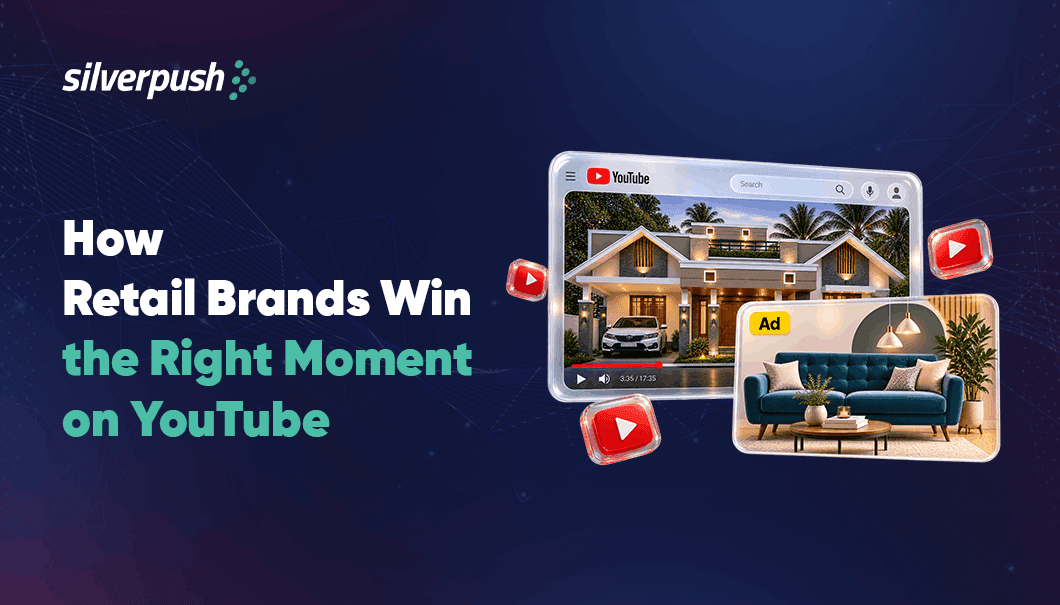
You're watching a home tour.
A creator moves through a sunlit living room, talking about the sofa, the light, the way the whole space finally works.
An ad plays. It's for car insurance.
You skip.
Now imagine the ad is for the exact sofa that would finish the room you've been redoing in your head.
You don't just watch it. You go and look it up.
That's the difference context makes. When the ad matches the moment, attention doesn't just hold. It turns into action.
One recent retail campaign shows how far that can go. A furniture brand, using Silverpush contextual targeting on YouTube, drove a +198% search lift across YouTube and Google, with a 92% completion rate to match.
Here's how showing up in the right content did what a demographic never could.
The problem: furniture isn't an impulse buy
It's considered aspirational and usually tied to something bigger: a move, a renovation, or a room someone has been picturing for months.
That made the brand's real challenge less about finding an audience than about timing one. It wanted to reach new buyers at the moment consideration actually forms, not interrupt them at random.
Standard targeting can put a sofa ad in front of the right age and income bracket. It can't tell you whose head is already in the room.
What we did: align with the moment, not the demographic.
So instead of buying a demographic, the campaign aligned with the content that signals someone is in "home mode."
Silverpush contextual intelligence placed the brand:
-
Alongside luxury fashion and real estate influencers, where aspirational taste is being formed.
-
Within content featuring premium brands, so the sofa sat among the signals its buyers already associate with quality.
-
Inside home goods and furnishing content, reaching people actively planning updates to their space.
Different content, one thread: every placement caught someone at a moment of wanting, not a line in a data set.
The result: +198% search lift, and what it means
The payoff wasn't just that people watched. It's that they acted.
The campaign drove a +198% search lift across YouTube and Google, alongside a 92% completion rate.
Completion tells you the ad held attention. Search lift tells you it did something rarer. It sent people looking. Nearly triple the usual number of viewers went and searched for the brand after seeing it in the right context.
Which is the reframe that matters:
From "Did they watch the ad?"
to "Did they go looking for us afterwards?"
It's not just furniture
The same move works in categories that have nothing in common. Different products, different audiences, different moments. One principle.
-
A construction equipment brand reached contractors and DIY homeowners by showing up in landscaping and home-improvement videos, earning a 94% view-through rate, 34% above benchmark.
-
A flower brand reached men before Valentine's Day inside NFL and football content, not floral videos, and earned an 89% view-through rate.
-
A global sportswear brand cut through Christmas noise by placing its message around competitor content and the athletes its audience already followed, earning 79% VTR and climbing to 81% on influencer content.
-
A premium outerwear brand protected its positioning by appearing in sustainability content and steering clear of fast fashion, earning 2x higher brand favorability and a +18% lift in Google search.
None of these started with "who is our customer." They started with "What is our customer watching, and what does that tell us about the moment they're in?"
Why the moment keeps winning
This is where retail is heading. Shoppers watch before they buy and keep watching long after. In the last year, retail content on YouTube drew 1.43 trillion views across product reviews, how-to tutorials, and unboxing videos, up 41% year over year. That is one of the findings in A Day in the Cart, our 2026 YouTube retail playbook. The old funnel has quietly become a loop, and every impression within it is a moment when purchase intent is formed.
The efficiency follows. In a separate study of 60M+ YouTube impressions with Lumen Research, contextually aligned campaigns delivered 37% higher attention per mille than benchmarks. Context doesn't just lift engagement. It makes the same media work harder.
The takeaway
A demographic tells you who might be watching.
Context tells you what they're watching and when.
Show up at the right moment, and attention isn't the finish line. It's the start. The viewer watches, then goes looking for you.
That's what +198% looks like.